Rechercher dans ce blog

Monday, February 7, 2022

Let’s Eat: Keeping food memories alive (8 photos) - Tbnewswatch.com

Tarja Keski-Pukkila, owner and founder of Mirjam’s Kitchen, started the home-based food business as an homage to her maternal grandmother.

Keski-Pukkila makes Finnish meatballs with gravy and other Finnish dishes and meals for sale through George’s Market and Celebrations. “Mirjam was my grandmother; she was 96 and she passed away about four years ago,” Keski-Pukkila explains.

“She came from Finland; she was a homemaker but she worked at numerous restaurants on Bay Street. When she retired, to make extra income, she made Finnish meatballs with gravy, and sold it at the Scandinavian Deli, across from the Hoito,” she says.

She has fond memories of helping her grandmother make the meatballs. Occasionally her mother would join in as well; three generations of Finnish women working together in the kitchen.

“It’s something I always enjoyed doing, so I would occasionally just make them and give them to family and friends. It was comfort food to me. It just brought me great comfort. This is what I wanted to do for a number of years, so I decided to try it and see if it would work,” she says.

In December she brought the meatballs and gravy, as well as traditional Finnish casseroles, cabbage rolls and rice pudding, to craft markets, where customers were very happy to find homemade Finnish food.

“I got a really good response from people; they felt that Finnish food was something we didn’t have a lot of in the city, which is surprising, considering the number of Finnish people,” she explains.

She approached Danny Thompson, co-owner of George’s Market and Celebrations, to sell her food there. “He’s just amazing; always kind words, giving me good advice and encouraging me,” she says gratefully.

Keski-Pukkila still works as a dental laboratory technician, and cooks in the evenings and on her days off. In addition to the all-beef meatballs in gravy, she makes dinner plates’ usually meatballs with mashed potatoes and a vegetable, or meatballs with gravy and egg noodles.

There is also Mojakka, Finnish rice pudding, and Hernekeitto (Finnish pea soup) made with local ham from George’s. “It’s different from French Canadian pea soup - we use whole peas,” she says, adding that Thursday is traditionally pea soup day in Finland.

A few customers have phoned her to ask for dinner plates, so she makes a few and delivers them herself Saturday morning. “The dinner plates are in a microwavable dinner dish, and I just enjoy making them because it’s like making somebody dinner,” she says.

“It has been very, very busy, but I’m just enjoying it thoroughly,” she says. “I can’t believe it. I just thought it would be meatballs and gravy. It’s so much more. Not only am I cooking more than I thought I would be, I’m learning more about Finnish culture, Finnish recipes. Learning new things, learning more about my heritage.”

Keski-Pukkila has fond memories of working at Finnish restaurants on Bay Street when she was young. She met many “beautiful, strong Finnish women” working there; immigrants from Finland. “We used to have chalkboards at the Hoito, and all of those foods on those chalkboards were homemade early that morning. I would love to bring that to people again,” she says.

Decades have passed and most of the women who cooked in those restaurants have long retired or passed away, but Keski-Pukkila hopes to bring that food back to life through Mirjam’s Kitchen.

“I would love to deliver somebody a meal that was on that board,” she says. “I would like to do that for people.”

Adblock test (Why?)


Let’s Eat: Keeping food memories alive (8 photos) - Tbnewswatch.com
Read More

Carnival season time to eat, drink and be merry - Ohio's Country Journal and Ohio Ag Net

By Shelly Detwiler, berry farmer and dietician

New Orleans is the place to party this month! First, let’s clear up some confusion. Carnival season starts at epiphany and is a time to eat, drink and be merry that includes parades, balls and other merriment leading up to Mardi Gras. Mardi Gras (also known as Fat Tuesday and Shrove Tuesday) is the peak, the culmination, the last hurrah, the final tick of the Carnival season game clock before fasting and prayer begin with Lent. Now I’ve been to the Big Easy, the grand finale may be complete, but the energy, music and food live on yearlong. 

Believe it or not this party all started with a pancake. The story goes that a Pope in the time of 600 AD forbade eating all meat and animal products during Lent. It spread to Southern England where parishioners used up their eggs, milk and butter the day before Ash Wednesday in the form of pancakes. It became known as Pancake Day in England. What Pancake Day wouldn’t be complete without a pancake race? That’s right, I said pancake race. These races give townspeople the chance to dress up racing down the street with a skillet and a cooked pancake tossing it as they go. This sounds like something I need to see! As the tradition spread through Europe and France the banned ingredients were used in pancakes, waffles, crepes, and King cakes Mardi Gras was born. 

 Kelli, a good friend, and fellow dietitian from the Bayou state, tells me that Mardi Gras goes way beyond the beads, the booze and naked debauchery. It’s about family time and it begins with camping out for the perfect spot for the festivities. Building parade treehouses for their kids out of ladders and a box give kids a bird’s eye view of the parades. With tents, chairs and other party items complete, it’s time to get down to the eating — and I mean good eats! It’s New Orleans version of Cajun marathon tailgating. Kelli, my sideline reporter, states that the number one thing you see down the parade route is Popeye’s fried chicken! It’s fast, easy and the perfect portable treat while watching all the jollities. Other roadside fare includes red beans & rice, jambalaya, Po’ Boys and of course King Cake. What about Gumbo? Kelli’s response to the question is: too messy. 

What’s a King Cake you ask? Kingcake.com condensed version is that King cakes were baked in a circle to symbolize the circular route the three kings took to throw Herod off the trail as they went to see the new babe Jesus. They are baked daily filled with fruit, cream or both decorated with gold, green and purple symbolizing power, faith, and justice. In early France when a pea, bean or coin were hidden in the cakes, the winner who found the hidden item was King for a day. New Orleans Mardi Gras bakers hid a mini plastic baby representing sweet baby Jesus. If you found the baby, you were the host of the next Par-TAY! Kelli tells me these days the babies are usually on the outside of the King cakes. I suppose some baby swallowing incident has influenced this recent turn of events. 

 Southernfood.org states “Mardi Gras is upon us…and so is our 10-pound weight gain!” Now as a dietitian I am not a promoter of eating like there’s no tomorrow. I mean we just came off Christmas, throw in Carnival season and we’ll be busting out the springs of the scale. BUT, I can’t wait to try some of these New Orleans regional festive treats. I hope you’ll join me, in moderation of course, for a jolly good time.

Eat well and Healthy,

Shelly

Instant Pot New Orleans-Style Red Beans and Rice: Camelliabrand.com

Traditional British Shrove Tuesday Pancakes: Christinacucina.com

Adblock test (Why?)


Carnival season time to eat, drink and be merry - Ohio's Country Journal and Ohio Ag Net
Read More

Sunday, February 6, 2022

Are You Ready to Eat Lab-Grown Meat? - Psychology Today

HQuality/Shutterstock
Source: HQuality/Shutterstock

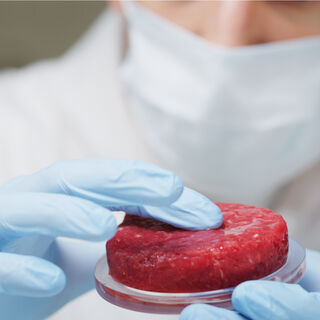
Recently, my inbox contained a news release about cultured chicken. This is not chicken that spent its life going to the great art museums and listening to classical music. "Cultured" referred to the chicken being grown from a cell culture of chicken cells. The article outlined how the chicken was cultured: Living cells are removed from a chicken, and, after various procedures, the cells reproduce to become meat indistinguishable from that of a naturally-born chicken.

The process of forming a filet mignon or chicken breast from a single cell is not simple. An article published in Frontiers of Nutrition described the multistep process. After the biopsy of muscle from a living cow or chicken, the tissue is dissected to release stem cells. These are cells that can transform themselves into different types of cells such as fat, muscle, or nerve. The cells are bathed in fetal bovine serum, a fluid that comes from a dead calf. Note: both the animal cells and calf serum make the end product a non-vegetarian or non-vegan product.

As the cells grow, they are supported by what is called scaffolding, which stretches the muscles and increases their protein contents. While this is going on, the nutrient content of the fluid from which the cells are fed can be modified to decrease, for example, the amount of saturated fat and increase the unsaturated fat content. The process is still very technologically new.

Although the finished products have not appeared in supermarkets yet, they may in the next few years. In January, Bloomberg Businessweek reported that Upside Foods Inc. opened an enormous factory outside Berkeley, Calif. to grow clumps of chicken and beef cells into respective chicken parts and beef.

Factories containing vats of rapidly reproducing chicken or beef cells yet may not replace ranches, but our government is taking this relatively new area of research and food production very seriously. Just last fall, the United States Department of Agriculture awarded $10 million to Tufts University to establish the National Institute for Cellular Agriculture. The center will focus on protein research that, “revolves around the use of a small amount of animal cells to create real meat and other animal proteins, replacing the environmentally damaging practice of raising and slaughtering animals for food.“

Will this novel form of meat, poultry, and eventually fish and seafood be accepted? Of course, many foods new to the eater may undergo a period of rejection before becoming commonplace in the dining room or on the restaurant menu. Sushi, for example, was not found in supermarkets, vending machines, and convenience stores for decades after being introduced to the American public in ethnic or fish restaurants. The idea of eating raw fish was so distasteful to Americans that some people (like my young cousins at the time) could not even look at it. Now, it is a common snack food as well as a gourmet delight. Decades ago, yogurt was something to be avoided unless one liked eating something that sort of looked like sour cream, but was much more sour tasting and watery. Cultivated meat may be accepted more readily as it has the advantage of looking and pretty much tasting like the real thing, and could be distinguished from the naturally raised product.

Cultured animal foods may appeal to anyone who is concerned about the conditions in which the animals that we eat are raised. The impact on the environment of growing animals, as it were, in a vat of broth rather than on pastureland is significantly less (although there is a substantial energy cost to growing the steaks and chicken breasts in vats). About 99 percent of animals used for food are raised as potential factory products, and the conditions in which they are raised make them susceptible to infection. One important benefit to humans consuming animal products generated in a culture is the ability to prevent infections, Salmonella and Listeria, for example, that may be fatal.

But, acceptance of this new form of protein is complicated psychologically, ethically, and religiously. A friend with whom I discussed this told me that she is happy to eat plant-based imitation meat because she knows that even though it might taste somewhat like a burger, it is “only pretend meat.” She is not so sure about a hamburger that is the result of cultivation growth in a gigantic test tube. “It just feels so unnatural to me, but of course it is,” she concluded. Vegetarians and vegans may also have a problem with cultivated meat, since the original cells come from a living animal, and the “broth” in which they are incubated comes from the serum of a fetal animal. Conversely, anyone vegetarian, vegan, or who otherwise sees avoiding harm to an animal as the paramount reason for not eating conventional animal products may welcome cultured meat as a humane alternative.

Religious groups such as Muslims, Jews, Hindus, and Buddhists have been surveyed, and acceptance of meat-eating varies depending on the source of the meat, and for some groups, whether the animal was slaughtered according to the religion’s law and commandments. Interestingly, groups that reject pork would also reject cultivated pork products, and Hindus are less likely to eat beef, as the cow is sacred. But the survey failed to address whether acceptance would be less if the meat were cultured from cells removed from a living animal.

Given the interest and financial investment in producing cultivated meats, each one of us will probably see these products in our supermarkets within a few years. Perhaps it is worthwhile now thinking about whether we will buy or reject a cultivated hamburger or chicken nugget.

Adblock test (Why?)


Are You Ready to Eat Lab-Grown Meat? - Psychology Today
Read More

Eat Up Your February Campaign invites explores Wellington County's local food options - EloraFergusToday.com

NEWS RELEASE
COUNTY OF WELLINGTON
***************************
WELLINGTON COUNTY/GUELPH - Taste Real’s Eat Up Your February Campaign invites the public to explore Wellington County's local food options and engage with agriculture and food during the winter months.

The initiative has put together a list of 20 different ways to shop local food, enjoy winter eats and explore outings and activities. Topics include; Valentine’s day gift ideas, signing up for a farm share, discovering local beverage options, and buying farm-direct.

The campaign also includes a list of favourite takeout dishes from restaurants across Guelph Wellington, as well as links to the Wellington Takeout Food Map and a restaurant map for the City of Guelph.

“Supporting local restaurants is key right now,” says George Bridge, Chair of Wellington County’s Economic Development Committee. “They play an important role in our food landscape here in Wellington County. The last two years have been especially hard for the hospitality sector and we want to see these businesses remain and thrive in our communities. While restaurants are open for dine-in with a limited capacity, takeout continues to be a great option and will contribute to the overall recovery of those businesses.”

In an effort to introduce even more people to local food options, Taste Real has teamed up with the Guelph Box to bring local winter flavours to people’s doorsteps across Wellington County and Guelph by offering a curated winter local food box. Box orders are on a first-come, first-served basis with delivery on February 26. Five percent of each order will be donated to Wellington County Food Banks.

Order details and more information about the Eat Up Your February campaign is available at tastereal.ca.

***************************

Adblock test (Why?)


Eat Up Your February Campaign invites explores Wellington County's local food options - EloraFergusToday.com
Read More

Saturday, February 5, 2022

Friday, February 4, 2022

What does a Winter Olympics athlete eat? Figure skating vs. women's hockey - National Post

Figure skaters and hockey players are both athletes and they both need enough fuel to go for gold at the 2022 Beijing Olympics

Article content

Ever wonder if there is any difference between the diet of a figure skater and a hockey player? How much protein and carbohydrates do these athletes need to fuel them at the 2022 Beijing Olympics?

Advertisement

Article content

We asked Jen Sygo, a registered dietitian and sport nutritionist who has worked with Olympic athletes to break down the nutritional demands of each sport, and how different types of skaters fuel themselves to ensure their best performance. Watch the video or read the transcript below to learn more.

My name is Jenn Sygo and I’m a registered dietitian and sport nutritionist based out of Toronto, Ont. And I’ve been working with national team athletes from a variety of sports for about 10 years now. I’ve been a dietitian for 18 years and at this point I service two of our national Summer Olympics teams, the Canadian women’s gymnastics team as well as athletics Canada, which is our Canadian track and field team, and I’m also the dietitian for the Toronto Raptors.

Advertisement

Article content

But as one of the parts my job, I serve as a consultant or a one-on-one nutrition service provider for certain national team athletes in other sports. So in my career I’ve worked with athletes from national team figure skating as well as members of the Olympic women’s hockey team who will be attending the games in Beijing.

In terms of the nutritional demands for figure skating, it’s a sport that obviously is attractive, it’s aesthetic, it’s done to music, it’s a performance. So there’s meant to be an element of audience involvement where they’re sort of taken along for an emotional ride as part of the performance.

So figure skaters tend to be very mindful of the overall look of everything, from the way that they present themselves for hair and makeup, to the sound of their music, to how their physique looks when they’re out on the ice. So what that means is that it can be a sport where athletes become quite body conscious. They’re aware they’re being judged and evaluated not only by the panel of judges but by everyone who’s watching at home. And so it’s a sport where we have to really be careful to strike a balance around making sure athletes are getting enough fuel to perform well and to be healthy, to make sure that they’re not increasing the risk of injury or illness, or that they’re struggling with recovery, while also being mindful that we want to keep their body in a healthy state so that they can manage all the difficulty that they have to do.

Advertisement

Article content

It’s a long program of four minutes. Often they’re having to do lifts and jumps, a lot of stamina required and so we want to try and find the sweet spot between maintaining that push and pull of being really healthy and taking care of yourself and also being able to manage all of those requirements on the ice.

Figure skaters are obviously both male and female and they’re going to vary significantly in terms of body size, so there’s no one calorie target that we can give. It’s going to vary by lots of different factors including how much training they’re doing, but what we can say is that you might hear about skaters saying that they’re eating really low calorie diets you know 1200 or 1500 calories a day and that’s simply not sustainable. We want to make sure that they’re fueling as an athlete, which for most most athletes is going to mean numbers above 2000 calories a day.

Advertisement

Article content

Now some athletes may eat less than that for periods of time or maybe because they don’t have an entirely healthy relationship with food but that’s not what we’re targeting. They do need to eat fuel like athletes and that means they need to eat at regular intervals through the day. We like them to have at least three meals and two snacks a day, and there should be a balance of both protein to help with muscle building and recovery and carbohydrates which is the energy they burn when they’re out on the ice. So, yes, skating is still a carb dependent sport even though it’s not running a marathon or you know swimming in open distance you know two hour long race in the water, but that four minutes on the ice when they’re performing their long program is a very carb dependent activity.

Advertisement

Article content

When we determine the nutrient needs for an athlete we almost always start with the protein requirements. So when we think about the nutrient needs for a figure skater we would start with usually their body weight and we start by taking a calculation of roughly about 0.3 grams of protein per kilo body weight per meal. What that’s going to translate to for most athletes is somewhere between about 15 and 25 grams of protein per meal, taken three or maybe four times per day. From there we figure out how many carbohydrates they require and that’s going to go up and down depending on their training load, but again we would determine that by body weight and then we round the rest of their calories out by fat. So at the end of the day they’re going to be getting a meal that looks a lot like what the rest of us would eat, roughly about a quarter of their plate maybe a third is going to be protein and maybe a quarter to a third, maybe sometimes half, will be carbohydrate and the remainder will be more of those vegetables and extra foods on the plate and a little bit of fat, used for flavour or for meal preparation or as a topping. So there’s general guidelines, but at the end of the day for these olympic athletes it’s quite customized.

Advertisement

Article content

The nutritional requirements for hockey can look a little bit different from figure skating but they’re not completely different. For sure hockey is a sport that has a lot of physical demands, you’re going to be moving very quickly on the ice, you have to make really quick judgment calls, you have to be able to basically sprint on the ice, and be able to sustain that through an entire game and through an entire tournament. So it asks a lot of the body, so we really have to be aware that hockey players are going to need a lot of carbohydrates in their diet. They’re also going to need a lot of protein to help repair all that muscle damage that comes from that high intensity activity that they repeat over and over and over again in these short shifts in each game. So it tends to be a higher calorie diet than you might see from a sport like figure skating, but at the same time hockey players are still mindful of maintaining an optimal weight for their performance. So they’re not necessarily eating as many calories as we might see from say an ironman triathlete who is, you know, out there for eight hours at a time competing. So there’s a balance between eating enough to make sure that they’re energized and strong and recovered but at the same time they are still trying to optimize their body weight and their power relative to their weight so that they can be as quick as possible and as agile as they can on the ice.

Advertisement

Article content

A female hockey player is going to require definitely well over 2,000 calories a day. For some it’s going to be 3,000 or even a little bit more depending on the day and what’s going on in their training. Sometimes they’re training twice a day so that’s going to vary but it’s still going to be significantly higher than what the average Canadian needs, which is 2,000 calories for a day. Of that 2,000 calories we would like to see it spread relatively evenly over the day, but paying attention to getting enough calories around the time of practices or games. So that means getting a good pre-practice or pre-game meal sometimes taking in some calories during the practice or game through things like sports drinks or gels or even fruit and then a good post-practice or post-game recovery meal or snack, and that should include both protein and carbohydrates to help with muscle repair. That’s what the protein does, and to help with what we call glycogen resynthesis, which is the carbohydrate in the muscle that allows us to go. So we have to be really aware that they’re getting not just enough total calories or enough total protein or carbs, but that it’s distributed so that their body is getting those nutrients at the time they need it, right around the time that they’re practicing or playing an important game.

Advertisement

Article content

For a female hockey player, most of them will need somewhere between 20 to 25 grams of protein per meal that’s about an amount of meat, that’s about the size of the palm of my hand, and so we start with that as a basis, and of course it doesn’t have to be meat, we could be using plant-based alternatives, there’s lots of protein options out there. Sometimes we use protein powders as well. But we start by basing their diet off their protein requirements and then we fill it out with extra carbohydrates. So their needs for carbohydrates are going to look something like about a third of their plate, sometimes half of their plate which is going to be maybe a cup and a half to two cups of carbohydrate per meal, and each athlete, each player is going to have individual needs depending on their goals but that’s a good guideline to give you an idea of where we would start. And then the rest of their plate, which will be about maybe a quarter to a third of their plate will be vegetables. That might be their salad or their broccoli or whatever it is that they enjoy and have available to them that day. So we want to take that overall picture of that plate and at least three times a day provide that balance, but also one extra time per day right after the training session or the game we want to have that recovery meal or snack. In those cases it might look more like a shake, maybe a smoothie with some protein powder or some yogurt and lots of fruit and maybe some extra carbohydrates in there from things like oats to be able to help them with that recovery process so that they can get ready for tomorrow’s practice or the next big game.

Advertisement

Article content

The biggest difference between a female hockey player and a figure skater is more than anything going to be the
difference in body weight and overall body shape. So a figure skater tends to be a little bit lighter and smaller than a hockey player does and so that might mean that their calorie needs are going to be a little bit lower. But
I also want to point out that they’re both athletes and I think sometimes we think of it as, ‘Well figure skaters need to be on diets and they need to eat nothing but vegetables or very few calories,’ and that’s simply not true. Figure skaters need to fuel themselves just like hockey players do. Because their load might be a little bit less sometimes or because of their smaller body size, they might eat a little bit less, but it doesn’t mean that we’re teaching them to eat as little as possible that’s a myth that we are trying to do away with in sport, help them understand that they do need to fuel themselves.

Advertisement

Article content

So everybody in sport needs protein, everybody needs a certain amount of carbohydrates. The hockey players might need a little bit more carbohydrate, they might be able to afford a little more fat in their diet because their calorie needs are a little bit higher, they might be a bit more intense about getting enough calories in and around their practice times or games. Certainly in the middle of a game they’re going to be taking maybe some fuel that a figure skater wouldn’t be doing, but they’re still both types of athletes. Skaters and hockey players, are both still athletes, and they both still need to fuel that way.

  1. Get the latest Olympics news

  2. 2022 Beijing Olympics - Figure Skating - Team Event - Ice Dance - Rhythm Dance - Capital Indoor Stadium, Beijing, China - February 4, 2022. Piper Gilles of Canada and Paul Poirier of Canada in action.

    Rough start to Olympic figure skating team event puts Canada on thin ice

We apologize, but this video has failed to load.

Advertisement

  1. Advertisement

Comments

Postmedia is committed to maintaining a lively but civil forum for discussion and encourage all readers to share their views on our articles. Comments may take up to an hour for moderation before appearing on the site. We ask you to keep your comments relevant and respectful. We have enabled email notifications—you will now receive an email if you receive a reply to your comment, there is an update to a comment thread you follow or if a user you follow comments. Visit our Community Guidelines for more information and details on how to adjust your email settings.

Adblock test (Why?)


What does a Winter Olympics athlete eat? Figure skating vs. women's hockey - National Post
Read More

Thursday, February 3, 2022

COVID-19: South Korean nose mask raises questions - CTV News

A South Korean company has come up with a new mask design that folds up to cover the user’s nose while dining in public, supposedly providing some form of protection against COVID-19 while eating and drinking.

The two-piece mask, called “Kosk”— a combination of “ko,” the Korean word for “nose,” and the word “mask”—is designed to be worn as a typical face mask, covering both the nose and mouth, but can be adjusted to cover just the nose.

One box, which includes 10 masks, currently retails for 9,800 won or about $10.35.

But it isn’t the mask’s fair price point that is attracting so much attention. Produced by South Korean company Atman, the Kosk mask has received 118 five-star ratings from Korean users, many of which allude to the peace of mind the mask brings them when dining in public.

On social media, however, many have questioned the efficacy of the unique design—including public health experts.

“Definitely, definitely, definitely would not provide ‘safe eating’! They could provide marginal protection and source control,” Claire Horwell, professor of Geohealth at the U.K.-based Durham University, tweeted Thursday.

Although there are studies that suggest COVID-19 most easily enters the body through the nose, when it comes to airflow, the physics of the beak-like mask would provide little protection to both the user and those around them.

“When you're talking, you're going to be breathing out [and in] to some extent. We know even that just speaking, let alone shouting or singing or something like that, expels a lot of virus,” Michael Brauer, professor at the University of British Columbia’s (UBC) School of Population and Public Health, told CTVNews.ca by phone Thursday.

“In terms of protecting others, which is the function of masks, I think this would be a really bad idea.”

More importantly, Brauer notes, you breathe in and out through your mouth when you’re eating and drinking. So even if you weren’t socializing, the likelihood of coming into contact with an airborne illness like COVID-19 is still possible.

“So not only is it not offering any real protection for those around you but it kind of offers a false sense of security that it's really doing anything,” he explained.

“But, wearing this while eating and drinking versus wearing nothing while eating and drinking… maybe it's better than nothing.” 

Adblock test (Why?)


COVID-19: South Korean nose mask raises questions - CTV News
Read More

22 Easy Ways to Eat More Veggies This Year - Self

It’s an all-too-familiar cycle: You stock up on loads of tasty-looking veggies at the store—only to have them wilt, rot, or go soggy by th...