Rechercher dans ce blog

Wednesday, September 7, 2022

Are You Ready to Eat the New Hottest Pepper in the World? - The New Yorker

Are You Ready to Eat the New Hottest Pepper in the World?

Red chili peppers in mid air.
Photograph from Getty

The Pompeii Spider Monkey pepper was bred in the forsaken land of Nebraska by a late-thirtysomething white guy going through a divorce that was definitely his fault but which he refuses to accept responsibility for. Trying to burn through his money so that there’d be less alimony to pay out, he poured all of his remaining bitcoins into breeding the hottest pepper on record. Rumor has it that he spent days screaming at the plants, and at nights would let them fall asleep to the so-so music of Jack Harlow. Sean Evans refuses to try it on principle, but perhaps you’d like to step up to the plate and eat it, so that you can, like, prove something about patriarchal masculinity?

So far, seven people have attempted to sample the Pompeii Spider Monkey; this has resulted in the deaths of seven men with weird beards. Allegedly, they were all told to wear special welding goggles, so as not to go blind from the pepper’s intense hot glow. Each and every one of these men replied, “Pfft, what do I look like, a p—,” before collapsing. Do you wish to try it, perhaps for free?

Figuring out how to market a hot sauce made with the Pompeii Spider Monkey took weeks. Normally, a company just slaps on whatever dumb bomb or goat’s-skull icon they think will appeal to the Metallica fans that make up their fan base, but not this time! For this pepper, the only image that the P.R. team could agree on to convey the product’s danger to potential eaters was a portrait of Ayn Rand with a word bubble containing the phrase “Maybe I was wrong.” Yum, yum, yum?

The flavor description on the hot-sauce label reads, “This condiment is not only a hundred-per-cent VEGAN but also a hundred-per-cent against the happiness of Caroline Teeter. Gluten-free, dairy-free, with NO FUCKING PINE NUTS, Pompeii Spider Monkey sauce is father, mother, brother, dog, rabbi, Drake superfan, coroner, and grizzled hit man all in one.” Shall we dig in?

The pepper is not without its merits. For one thing, scientists agree that eating it in any form will allow you to see through time. Allegedly, the new breed of chili got its name when someone watched a chimp drop a match into an Italian volcano. Consuming one is also a guaranteed way to become sterile. (Take that, SCOTUS!) Who wants seconds?

In an interview, the pepper’s creator said that he just wants to sell his pepper “so that I can buy lots of random gears and parts . . . to . . . uh, take care of some stuff.” Is that ominous statement making your tummy rumble? Who’s ready to go to a neighborhood of Flavortown that even Guy Fieri’s never visited? ♦

Adblock test (Why?)


Are You Ready to Eat the New Hottest Pepper in the World? - The New Yorker
Read More

Tuesday, September 6, 2022

American tourist fined for eating ice-cream on steps of Rome fountain - The Guardian

[unable to retrieve full-text content]

American tourist fined for eating ice-cream on steps of Rome fountain  The Guardian
American tourist fined for eating ice-cream on steps of Rome fountain - The Guardian
Read More

Just Eat digitises lunch vouchers in new business offering - Business Plus

Just Eat has introduced its Just Eat Pay service to Ireland, a platform that in effect puts the old-fashioned lunch voucher online.

Businesses of any size can use the platform to provide employees with a daily or monthly allowance to order a meal from the 3,500 Irish restaurants and convenience partners that subscribe to Just Eat.

The company is also making available a Just Eat Pay debit card which will work via the Just Eat website and app, and also at selected Mastercard and Maestro merchants in Ireland.

Managing director Amanda Roche-Kelly said: “With a complete overhaul of how we work post-pandemic, Just Eat Pay will allow corporations to offer its employees next level food benefits, no matter where they choose to work.

"The best part about this offering is, it doesn’t matter if employees are working remotely, on-the-go, travelling abroad or working in the office, they have lots of food choices.”

The Pay service was first introduced in 2019 and is available in Britain and several EU countries.

Just Eat for Business managing director Matthew Ephgrave added: “We are delighted to continue to add further markets such as Ireland to this product offering.

Just Eat Business Offering
Businesses of any size can use the platform to provide employees with a daily or monthly allowance to order a meal from the 3,500 Irish restaurants and convenience partners that subscribe to Just Eat. Photograph: Sasko Lazarov / RollingNews.ie

"Just Eat Pay has been hugely successful in the UK market for corporate businesses providing a really great employee benefit.

“So far the UK market has seen great uptake of the service with a huge number of companies utilising the Just Eat Pay product offering, providing their employees with a fantastic benefit each month.”  

Adblock test (Why?)


Just Eat digitises lunch vouchers in new business offering - Business Plus
Read More

Monday, September 5, 2022

13 Foods You Should Never Eat Past The Expiration Date - Health Digest

Of all the foods you should be throwing away once they're past their expiration date, meat is probably the top one. Meat can quickly turn from fresh to rancid, with a grey discoloration or tint occurring, alongside a noticeably "off" smell that can be reminiscent of ammonia or sulfur, according to Livestrong. The meat can also feel slimy to the touch.

When this starts to happen, it's time to get rid of it, because some pretty harmful consequences can happen if you don't. Although meat that's past its prime may not make you sick (and cooking it thoroughly will reduce your chances of this further), there's a range of bacteria that can reside and thrive in old meat that could prove troublesome. E. coli, Staphylococcus, Salmonella, and Clostridium can all contaminate your meat and lead to food poisoning, the symptoms of which can include vomiting, diarrhea, and fever. 

Aside from the expiration date on your food, it's useful to have a general idea of how long uncooked meat can stay fresh. Poultry and ground meat will generally go off the fastest, lasting just a few days in your fridge. Steaks may last a little longer, and will generally stay fresh for five days or so.

Adblock test (Why?)


13 Foods You Should Never Eat Past The Expiration Date - Health Digest
Read More

How To Eat Healthy When You're Dealing With Depression - Health Digest

Fortunately, there are a few steps you can take to help you eat healthier when you're feeling depressed. According to WebMD, cooking and sharing a meal with a friend or loved one can help improve your mood and get some food in your stomach when you don't feel like eating. It's also important to eat foods that will have a positive impact on your mind and body. For instance, health experts recommend sticking to nutrient-dense foods like fruits, vegetables, whole grains, lean meats, and low-fat dairy products.

"These foods are more likely to keep your mood stable than processed foods and foods with added sugar," Rosa Schnyer, a clinical assistant professor at the University of Texas College of Pharmacy, told WebMD. Eating three regular meals or five smaller meals throughout the day can also help regulate your mood, as well as eating healthy snacks, like nuts, fruit, yogurt, carrot sticks, and hummus. In order to prevent any major mood swings or spikes in blood sugar, you should try to avoid drinking alcohol, and eliminate caffeine and added sugar from your diet.

Adblock test (Why?)


How To Eat Healthy When You're Dealing With Depression - Health Digest
Read More

Sunday, September 4, 2022

The Most Crucial Eating Habit for Arthritis — Eat This Not That - Eat This, Not That

If you experience inflammation in your joints that causes pain and stiffness, you may be one of the 58.5 million people in the United States who suffer from arthritis. Arthritis can worsen with age, and there is no cure for it. However, there are ways to help relieve some of the symptoms or help slow it down. These include lifestyle changes, which can start with being mindful about the foods you eat.

Certain foods have been shown to alleviate some of the discomfort and pain associated with arthritis, thanks to the important vitamins and minerals they provide. You might also consider incorporating more healthy eating habits into your daily routine in general, which will help ensure you're maximizing the benefits of the nutrients you get from food. That being said, according to Sydney Greene, MS, RDN, the most crucial eating habit for arthritis is getting enough green vegetables every day.

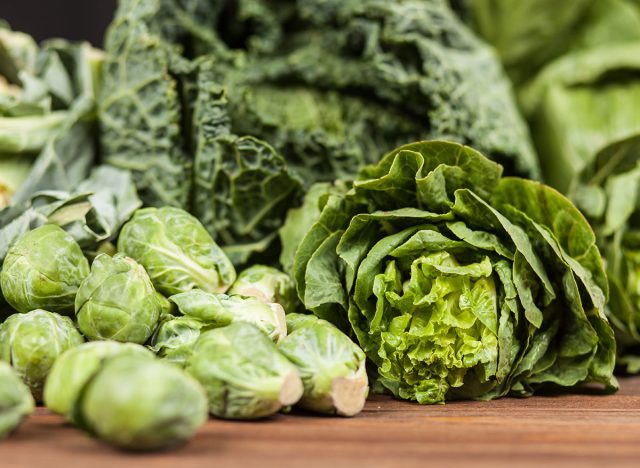
"Eating plenty of green vegetables is important if you want to fight inflammation and support your joints," says Greene. "Leafy greens, broccoli, Brussels sprouts, asparagus—they are rich in antioxidants and phytochemicals that help to block cells from damage."

The Arthritis Foundation also states that green, leafy vegetables like spinach, kale, and others may protect cells from free-radical damage. This is due to the vegetables' high antioxidant count, which is full of vitamins A, C, and K.

The findings of a study published in the International Journal of Preventive Medicine suggest that antioxidants may help improve disease activity significantly. The study further determined that antioxidants may be useful for helping to manage oxidative stress in rheumatoid arthritis.

leafy greens
Shutterstock

Meanwhile, in a study published by the American Journal of Lifestyle Medicine, it was determined that a diet rich in dark, leafy green vegetables may help to increase beta-carotene—a pigment that converts into vitamin A. It may also help decrease C-reactive protein (CRP), a protein that, when elevated, can be a sign of acute inflammation, meaning it can potentially reduce the risk or severity of chronic diseases that involve inflammation.

The researchers suggested that this experimental diet should be called the Low Inflammatory Foods Everyday (LIFE) diet. The foods in the diet included spinach, kale, collard greens, Swiss chard, and bok choy.

So, if you have arthritis, try adding more leafy greens and cruciferous vegetables into your diet. These foods can help reduce the inflammation that causes painful symptoms and improve your overall bodily health at the same time, so it's a win-win.

Kayla Garritano

Kayla Garritano is a Staff Writer for Eat This, Not That! She graduated from Hofstra University, where she majored in Journalism and double minored in Marketing and Creative Writing. Read more about Kayla

Adblock test (Why?)


The Most Crucial Eating Habit for Arthritis — Eat This Not That - Eat This, Not That
Read More

You Are What You Eat: Nutrition and Depression - Psychology Today

by Grant H. Brenner

“You are what you eat” is an oft-repeated anthem, a quick way for us say that what we eat matters on an essential level to our health and well-being. It's far too easy to ignore or dismiss, given the power of emotional, or stress, eating. Increasingly, and compellingly, a growing body of research identifies connections between diet (along with other lifestyle elements) and how we feel physically and psychologically.

What we eat has a direct effect in terms of nutritional richness, as well as affecting interrelated factors, including gut bacteria (the microbiome and use of psychobiotics to address mental health), inflammation; energy metabolism (e.g. mitochondrial function and nutritional supplementation), antiaging medicine; and effect on memory and cognition—sometimes subsumed under the rubric "nutritional psychiatry".

Eating and nutrition are, of course, a critical aspect of social behavior—breaking bread—and for many reasons, social life is as integral to health as are individual efforts, adding a layer of nuance to food choices. It's easier to be healthy when we partner with others to achieve our goals. While smaller studies are interesting and often drive individual behavior (e.g. changing diet or taking a supplement after reading something online), population-based studies provide more robust data to inform decision-making1.

Enlightened Eating

There are two sides to the nutrition/well-being coin: one is how poor eating habits and consuming junk food negatively affects health; the other is how enlightened eating, sometimes referred to as “food as medicine,” can enhance health and longevity while preserving or enhancing pleasure. The Mediterranean diet, for instance, associated with reduced depression risk, is also delicious.

Rarnie McCudden/Pexels
Source: Rarnie McCudden/Pexels

The Leading Edge

Our understanding of food, lifestyle, and health is growing by leaps and bounds, reflecting greater collective awareness. A recent article on NPR, for example, calls for a coordinated, multipronged approach with seven elements:

  1. Treat food as medicine.
  2. Focus on quality of calories, not just quantity.
  3. Expand access to dietary and lifestyle counseling.
  4. Support food entrepreneurs.
  5. Increase the number of new farmers growing healthy foods using regenerative farming techniques.
  6. Make school meals free for all students.
  7. Establish a federal food czar.

Underlying many of the above initiatives is the need to better understand the role of proper nutrition as well as the detrimental effects of inadequate nutrition. To date, in spite of increasing research on the psychiatric impact of diet, there have been limited population-based studies on the role of nutrition on depression. However, a recent study reported in the Journal of Affective Disorders (2022) addresses this gap in the literature.

Researchers Owczarek, Jurek, Nolan and Shevlin, using the U.S. National Health and Nutrition Examination Surveys (NHANES) for 2017-2018, included data from about 5,000 U.S. adults. In this study. They focused specifically on nutrition and depression, although the NHANES study covers a broad range of measures.

THE BASICS

The NHANES survey collects participant dietary habit information over the course of two detailed interviews to estimate the nutritional quality of the foods they ate. This data was used to determine levels of daily intake of: calories, fiber, folate (vitamin B9), vitamin B1, vitamin B12, vitamin K, calcium, magnesium, iron, zinc, copper and selenium, benchmarked to recommended daily amounts required for adequate nutrition. For each nutrient, participants were noted to be either meeting or not meeting daily requirements. Depressive symptoms were measured using the Patient Health Questionnaire-9 (PHQ-9).

Statistics included age, gender, marital status, education level, weight, income and related factors, along with medical data such as tobacco use and diagnosis of conditions including diabetes, high blood pressure, and arthritis. The data were analyzed to identify the best fit of nutritional status with depression. In studies of this type, the goal is to build a model based on how many categories best explain the overall pattern—technically, a “latent class analysis”.

Diet Essential Reads

Broad Classes of Nutrition Influence Depression Risk

Nearly 10 percent of the NHANES sample were above the cutoff point suggesting clinically-significant depression. Four classes of nutritional status tracked with depression.

  1. Low Nutrient Class (35.3 percent), with low folate, fiber, vitamin K and magnesium, and medium to high levels of the other nutrients measured, had higher depression scores relative to the Sufficient Nutrient Class (#2).
  2. Sufficient Nutrient Class (27.6 percent), with high values of nutrients aside from lower fiber and vitamin K, had lower depression scores on average. This group was also associated with higher educational level.
  3. Low Fiber and Magnesium Class (22.6 percent), similar to the Sufficient Nutrient Class, with lower fiber and magnesium. had lower depression scores on average. People in this group were more likely to have higher weight compared with Class 4.
  4. Nutrient Deprived Class (14.5 percent), with low nutrients across the spectrum, had the highest average depression scores. This was the only class with a significantly increased risk of meeting at least moderate depression score per the PHQ-9. Men were more likely to be in this class.

Nutrition class contributed to up to 10 percent of the difference in depression score, suggesting that diet has a significant but circumscribed impact on depression.

Nutritional deficiency was associated with the highest level of depression. Age and income protected against nutritional deficiency. Study authors report that prior research has found that psychiatric illness is associated with lower intake of vitamins and minerals, a finding in the current data as well2.

Implications for Diet and Future Directions for Nutritional Psychiatry

The strongest association with depression was in the Nutrient Deprived Class, underlining the importance of overall nutritional status. In short, general insufficiency of a range of vitamins and minerals has a high impact.

This work supports the overall notion that a balanced diet is important for maintenance of mood, while highlighting that for individuals, specific factors such as fiber and magnesium intake (associated with obesity) may be important.

 Bret Kavanaugh/Unsplash
Source: Bret Kavanaugh/Unsplash

The relationship between nutritional status and depression is complex. This early population-based research provides groundwork for understanding how nutrition relates to depression. Future work ideally is prospective, similar to the Framingham Study, following a large group of people over the course of generations to identify strong causal nutritional factors that can be addressed in order to reduce the general risk of psychiatric illness and inform a rational treatment regimen.

In the meantime, eating a balanced diet and following best recommendations for overall healthy eating, addressing individual factors including inflammation and other medical conditions, reducing identified risk factors, and taking a holistic, personalized approach with attention to many lifestyle factors, is most likely to result in greater well-being.

Overall nutrition was more important in this study than any specific factors. There is no magic bullet, so far.

Adblock test (Why?)


You Are What You Eat: Nutrition and Depression - Psychology Today
Read More

22 Easy Ways to Eat More Veggies This Year - Self

It’s an all-too-familiar cycle: You stock up on loads of tasty-looking veggies at the store—only to have them wilt, rot, or go soggy by th...